EN


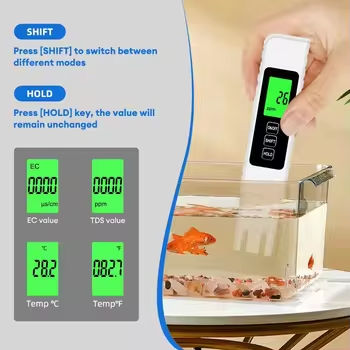
The performance and lifespan of a ppm meter depends significantly on the quality of its probe. A high-quality probe not only delivers accurate readings but also extends the operational life of your entire measurement device. Many users overlook the direct connection between probe construction, material durability, and overall ppm meter performance, leading to premature equipment failure and unreliable data. Understanding this relationship is essential for anyone relying on dissolved solids measurements in aquariums, hydroponics systems, swimming pools, or drinking water testing.
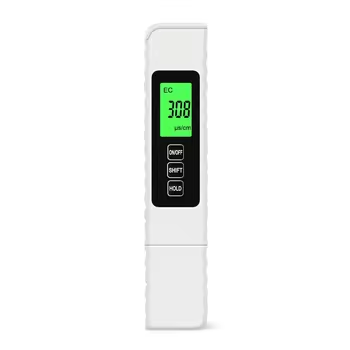
Probe quality directly influences measurement accuracy and sensor longevity. A superior ppm meter incorporates probes made from corrosion-resistant materials that withstand harsh water conditions and chemical exposure. Without proper probe construction, even an expensive ppm meter will degrade quickly, producing inconsistent readings and requiring frequent recalibration. This article explores how probe material, design, and maintenance practices affect your ppm meter's precision and lifespan.
Probe Material and Corrosion Resistance
The Role of Electrode Composition
The electrode materials used in a ppm meter probe determine its resistance to corrosion and oxidation. Premium ppm meter models use stainless steel electrodes coated with protective layers that prevent degradation when exposed to acidic, alkaline, or mineral-rich water. Lower-quality probes employ uncoated metals that corrode rapidly, leading to electrical resistance buildup and signal loss. Over time, a corroded ppm meter probe cannot transfer electrical signals effectively, causing the device to display erratic or false readings.
Impact on Measurement Stability
A high-quality ppm meter maintains stable calibration longer because its probe resists electrochemical degradation. When the probe in your ppm meter experiences corrosion, the electrode surface becomes uneven and develops insulating oxide layers that interfere with conductivity detection. This directly translates to reduced measurement stability, especially in demanding environments like salt-water aquariums or pools treated with chlorine. Investing in a ppm meter with superior probe materials protects your measurement integrity and operational uptime.
Precision Loss and Sensor Drift
How Probe Degradation Causes Accuracy Decline
Sensor drift occurs when a ppm meter probe loses its ability to detect conductivity changes accurately. This happens because the electrode surface area shrinks due to corrosion, reducing the electrical field strength required for precise measurement. A properly manufactured ppm meter incorporates probes with specific geometric designs that maintain consistent electrode spacing and surface characteristics throughout their operational life. Poor probe construction leads to accelerated sensor drift, forcing users to recalibrate their ppm meter far more frequently than the manufacturer's recommended schedule.
Calibration Reliability Over Time
The calibration points of a ppm meter depend on the probe's inherent stability. High-quality probes retain their calibration longer because their electrode materials resist the structural changes that cause signal drift. When a ppm meter probe degrades, even freshly calibrated reference points become unreliable within days. This creates operational inefficiency and risk, especially in critical applications where water quality affects product quality or safety. A robust ppm meter minimizes recalibration frequency by using probes engineered for long-term electrochemical stability.
Maintenance Practices and Service Life Extension
Proper Probe Cleaning Techniques
Even a premium ppm meter requires regular maintenance to preserve probe performance. Mineral deposits and biological growth accumulate on the electrode surface, creating a barrier that disrupts conductivity detection and causes your ppm meter to report inflated readings. Gentle cleaning with distilled water and a soft brush removes these deposits without scratching the electrode. Never use abrasive materials or harsh chemicals on your ppm meter probe, as they can damage protective coatings and accelerate degradation. Proper maintenance routines significantly extend both probe life and ppm meter accuracy.
Storage and Environmental Control
Between uses, a ppm meter probe must be stored correctly to prevent corrosion and bacterial growth. The probe should be kept in a protective cap filled with storage solution designed specifically for ppm meter sensors. Extended exposure to air oxidizes the electrode surface, while immersion in untreated water promotes mineral buildup and microbial colonization. Temperature fluctuations also stress probe materials, causing micro-fractures that compromise ppm meter reliability. By maintaining consistent storage conditions and using appropriate protective solutions, you can keep your ppm meter functioning accurately for years longer than devices exposed to neglect.
Longevity Factors and Equipment Lifespan
Impact of Water Chemistry on Probe Lifespan
The chemical composition of the water being tested significantly affects how long a ppm meter probe will perform reliably. High-salinity environments, acidic or alkaline solutions, and water containing reactive ions accelerate electrode corrosion even in quality probes. A ppm meter used exclusively with stable, neutral-pH water experiences minimal probe degradation and can maintain accuracy for three to five years or longer. Conversely, a ppm meter deployed in harsh industrial applications or high-chlorine pools may require probe replacement within eighteen to twenty-four months. Understanding your application's water chemistry helps you select a ppm meter with appropriately engineered probes and predict maintenance intervals.
Design Features That Support Longevity
Top-tier ppm meter models incorporate design features that maximize probe durability. These include protective shields around electrodes, sealed connectors that prevent moisture infiltration, and replaceable probe modules that simplify maintenance without replacing the entire ppm meter. A well-designed ppm meter also includes indicators that signal when probe performance has degraded beyond acceptable thresholds, prompting timely replacement. Some advanced ppm meter systems feature automatic temperature compensation that adjusts readings for thermal effects, reducing stress on the probe. These engineering details distinguish quality ppm meter devices from budget alternatives and translate directly into extended service life and reliable measurements.
FAQ
How often should a ppm meter probe be replaced?
A ppm meter probe typically lasts between two to five years depending on water conditions, usage frequency, and maintenance quality. If your water contains high mineral content, chlorine, or other corrosive substances, replace the probe annually or as soon as recalibration becomes inconsistent. Regular inspection and proper storage of your ppm meter significantly extend probe lifespan. Most manufacturers recommend replacement when readings become erratic despite calibration attempts.
Can a degraded ppm meter probe be restored?
Minor electrode damage on a ppm meter probe can sometimes be addressed through gentle cleaning and storage in appropriate solutions, but severely corroded probes cannot be fully restored. Once structural corrosion reaches your ppm meter probe's electrode core, replacement is the only reliable solution. Attempting to repair a heavily damaged ppm meter probe through aggressive cleaning or chemical treatment typically worsens the problem and may damage internal circuitry. Prevention through proper maintenance and storage is far more cost-effective than attempting repairs on a compromised ppm meter.
What role does calibration play in ppm meter accuracy?
Calibration adjusts a ppm meter's electronics to match reference standards, compensating for minor probe aging and signal drift. However, calibration cannot restore a physically degraded ppm meter probe or reverse corrosion damage. Regular calibration maintains accuracy only when the probe remains in acceptable condition; a severely corroded ppm meter probe will produce erratic readings despite frequent calibration attempts. Combining proper calibration schedules with probe maintenance and timely replacement ensures your ppm meter delivers consistent, reliable measurements throughout its service life.