EN
EN


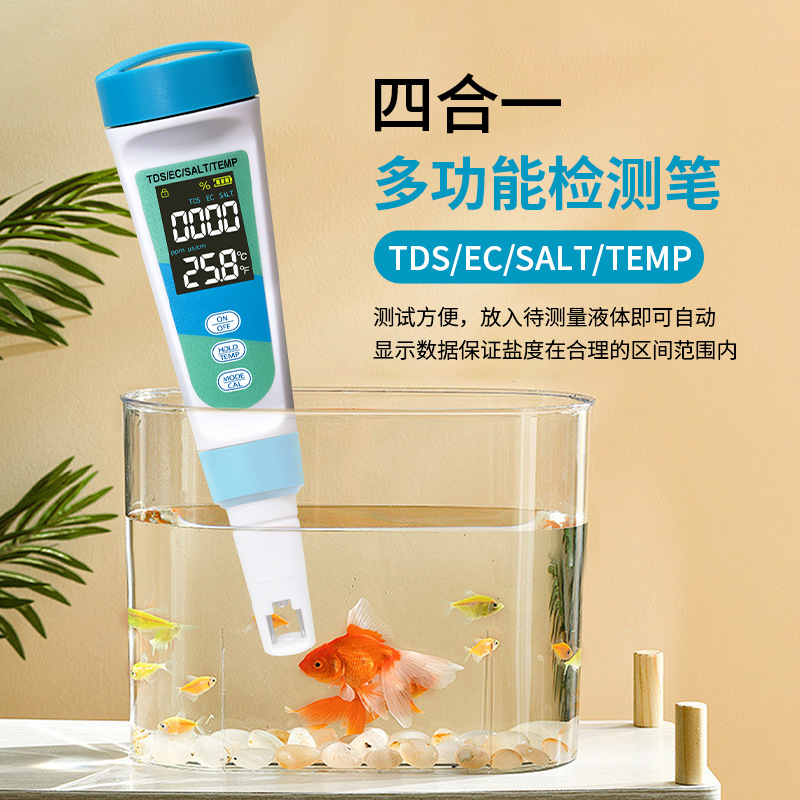
Marine research demands precision and reliability in every measurement, and no instrument is more central to oceanographic fieldwork than the salinity meter. The accuracy of a salinity meter directly influences the validity of research data, environmental monitoring, and scientific conclusions drawn from field observations. Understanding the standards that govern salinity meter performance is essential for researchers who depend on these instruments to deliver consistent, trustworthy results in challenging marine environments.
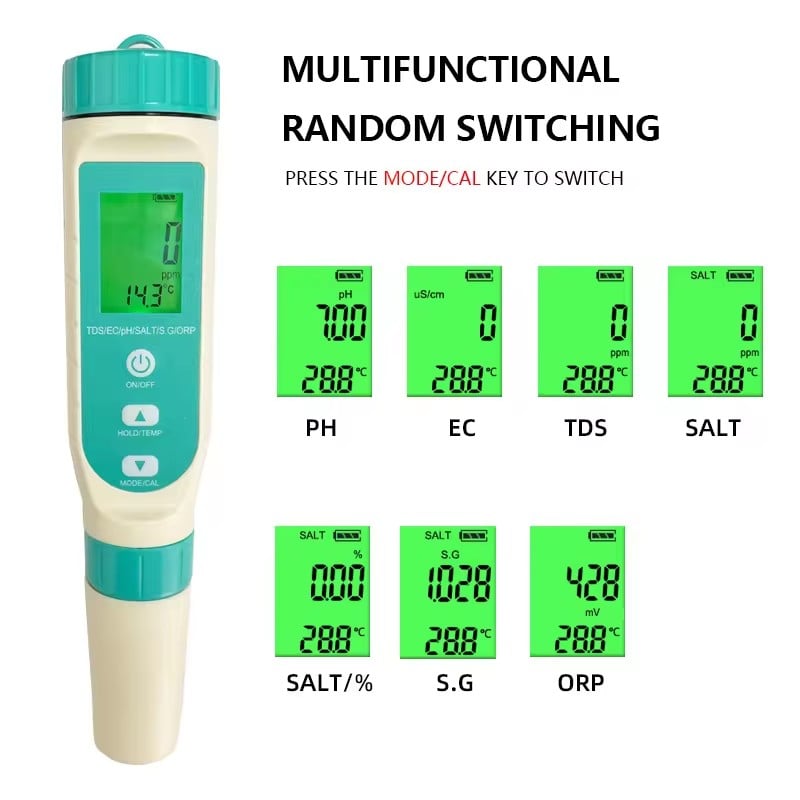
Professional-grade salinity meter instruments must meet stringent international standards to ensure data integrity in marine and oceanographic research. These standards establish baseline performance requirements, calibration protocols, and measurement tolerances that allow researchers across institutions and continents to compare findings confidently. A salinity meter that meets recognized accuracy standards becomes a dependable tool rather than a potential source of measurement error.
International Standards Governing Salinity Meter Performance
ISO and ASTM Certification Requirements
The International Organization for Standardization (ISO) and the American Society for Testing and Materials (ASTM) establish the framework that defines acceptable salinity meter accuracy specifications. ISO 23971 specifically addresses conductivity measurement in natural water and seawater, while ASTM D1125 covers electrical conductivity and resistivity of water. A salinity meter certified to these standards must demonstrate measurement accuracy within defined tolerances across the full operating range, typically requiring accuracy within ±2% to ±5% of the measured value depending on the salinity range. These certifications are not optional recommendations; they are fundamental requirements that distinguish professional research-grade instruments from consumer-grade alternatives.
Practical Accuracy Thresholds for Marine Applications
For marine research, a salinity meter must achieve accuracy better than ±0.1 practical salinity units (PSU) in typical ocean conditions ranging from 0 to 42 PSU. This requirement ensures that subtle environmental variations—such as freshwater plume intrusion, coastal upwelling, or density stratification—are reliably detected and quantified. When researchers deploy a salinity meter in estuarine environments or polar regions where salinity fluctuations are rapid and pronounced, instrument accuracy becomes even more critical. The distinction between a salinity meter rated at ±1 PSU accuracy versus ±0.1 PSU accuracy can determine whether subtle ecological shifts or water mass boundaries are observable or masked by measurement noise.
Calibration Protocols and Traceability Standards
Frequency and Methodology of Salinity Meter Calibration
A salinity meter cannot maintain accuracy without rigorous calibration protocols and documented traceability to recognized reference standards. Professional marine research requires that every salinity meter be calibrated before field deployment, ideally using two-point or three-point calibration methods with certified reference solutions traceable to standards maintained by organizations like the National Institute of Standards and Technology (NIST). Single-point calibration is insufficient for applications demanding high accuracy. The standard protocol for a research-grade salinity meter involves calibration at 0 mS/cm (demineralized water) and one or more higher standards typically at 12.88 mS/cm or 42.9 mS/cm to represent typical seawater conductivity. Inter-campaign recalibration ensures that instrument drift, which commonly occurs after several weeks of continuous use or after exposure to temperature extremes, does not compromise data quality.
Documentation and Measurement Traceability
Every measurement recorded by a salinity meter must be traceable to international standards through documented calibration records and reference solutions. This traceability is essential for peer review, data archival, and cross-validation with other research institutions. When a salinity meter generates data that will be published or contributed to regional or global oceanographic databases, the instrument must carry a calibration certificate detailing reference solutions used, calibration date, and measured accuracy at each calibration point. The reference standards themselves must be verifiable against primary standards maintained by metrology organizations, creating an unbroken chain of traceability that validates the salinity meter data's scientific credibility.
Temperature Compensation and Environmental Performance Standards
Temperature Dependency in Salinity Meter Measurements
A critical accuracy challenge for any salinity meter is maintaining consistent performance across the temperature ranges encountered in marine environments, which may span from near-freezing polar waters below 0°C to warm tropical surface layers exceeding 30°C. The electrical conductivity that a salinity meter measures is temperature-dependent; conductivity increases approximately 2% per degree Celsius in seawater. Professional salinity meter instruments address this through automatic temperature compensation (ATC), using embedded thermistors and calibrated algorithms to correct conductivity readings to a standard reference temperature, typically 25°C. Without proper temperature compensation, a salinity meter could introduce errors exceeding ±5% when deployed across significant thermal gradients. Advanced instruments feature temperature correction curves validated against international standards, ensuring that a salinity meter delivers equivalent accuracy whether measuring cold upwelling water or warm surface conditions.
Stability and Sensor Durability Standards
Marine environments are inherently harsh, with corrosive saltwater, biofouling organisms, sediment abrasion, and pressure changes that challenge instrument durability. A research-grade salinity meter must employ sensors constructed from materials resistant to seawater corrosion, such as stainless steel or graphite electrodes, and the housing must withstand extended immersion and rough handling. Standard specifications for marine salinity meter instruments require that sensors maintain calibration stability for at least 500 measurements or several weeks of continuous deployment without recalibration, depending on environmental conditions. Pressure rating standards ensure that a salinity meter designed for deep-water research can function accurately at deployment depths typical for the intended application, whether shallow coastal waters or abyssal zones. These durability standards prevent measurement degradation from environmental exposure and extend the reliable operating life of expensive research equipment.
Selection Criteria for Meeting Research Requirements
Matching Accuracy Specifications to Research Objectives
Different marine research applications demand different accuracy levels for a salinity meter. Coastal ecological surveys monitoring species distribution relative to salinity gradients typically require ±0.2 PSU accuracy, whereas paleoclimate reconstruction from sediment pore water or high-precision estuarine transport models may demand accuracy better than ±0.05 PSU. Before selecting a salinity meter, researchers must define the minimum accuracy threshold required for their specific application and verify that candidate instruments meet this standard through independent testing or manufacturer documentation tied to recognized certification bodies. This alignment between research objectives and salinity meter accuracy prevents investment in over-specified instruments while ensuring that deployed equipment will not become a limiting factor in data quality or scientific conclusions.
Validation and Cross-Checking Protocols
Leading marine research programs employ validation protocols to verify that a salinity meter continues meeting published accuracy standards throughout its operational lifetime. These protocols may include periodic intercomparison with reference instruments, duplicate measurements at fixed stations, or cross-validation against laboratory conductivity measurements conducted on water samples collected alongside field data. Best practices recommend that any salinity meter used in multi-year studies or collaborative research networks undergo annual or semi-annual verification against reference standards, with results documented in quality assurance records. This validation discipline transforms a salinity meter from a standalone device into a verified component of a traceable measurement system, significantly strengthening the scientific defensibility of collected data.
FAQ
What accuracy rating should a marine research salinity meter achieve?
A marine research salinity meter should achieve accuracy within ±0.1 practical salinity units (PSU) in typical seawater conditions for general oceanographic work, though specific research goals may demand accuracy better than ±0.05 PSU. Instruments used for shallow estuarine studies, where salinity fluctuates rapidly, require comparable or superior accuracy to resolve ecologically meaningful variation. Certification to ISO 23971 or equivalent international standards provides assurance that a salinity meter has been independently tested and validated against recognized benchmarks.
How often should a salinity meter be calibrated for accurate measurements?
A salinity meter should be calibrated before each field deployment and recalibrated every four to eight weeks during extended studies or after significant temperature or use-intensity changes. Research institutions often establish formal protocols requiring that a salinity meter undergo documented calibration at least annually, with intermediate verification measurements conducted at field sites to detect drift early. Calibration frequency depends on instrument type, environmental conditions, and the criticality of measurement accuracy for specific research objectives; when in doubt, more frequent calibration of a salinity meter provides greater confidence in data integrity.
Can a salinity meter maintain accuracy in cold polar or warm tropical waters?
A properly calibrated salinity meter with automatic temperature compensation maintains accuracy across polar temperatures below 0°C and tropical temperatures exceeding 30°C, because the instrument corrects temperature-induced conductivity variation using validated algorithms. The critical requirement is that the salinity meter's temperature compensation has been calibrated for the full operational range relevant to your research, and that reference standards used during calibration span the temperature extremes you will encounter. Always verify that a salinity meter's temperature range specification and compensation accuracy match your deployment conditions before field use.