EN
EN


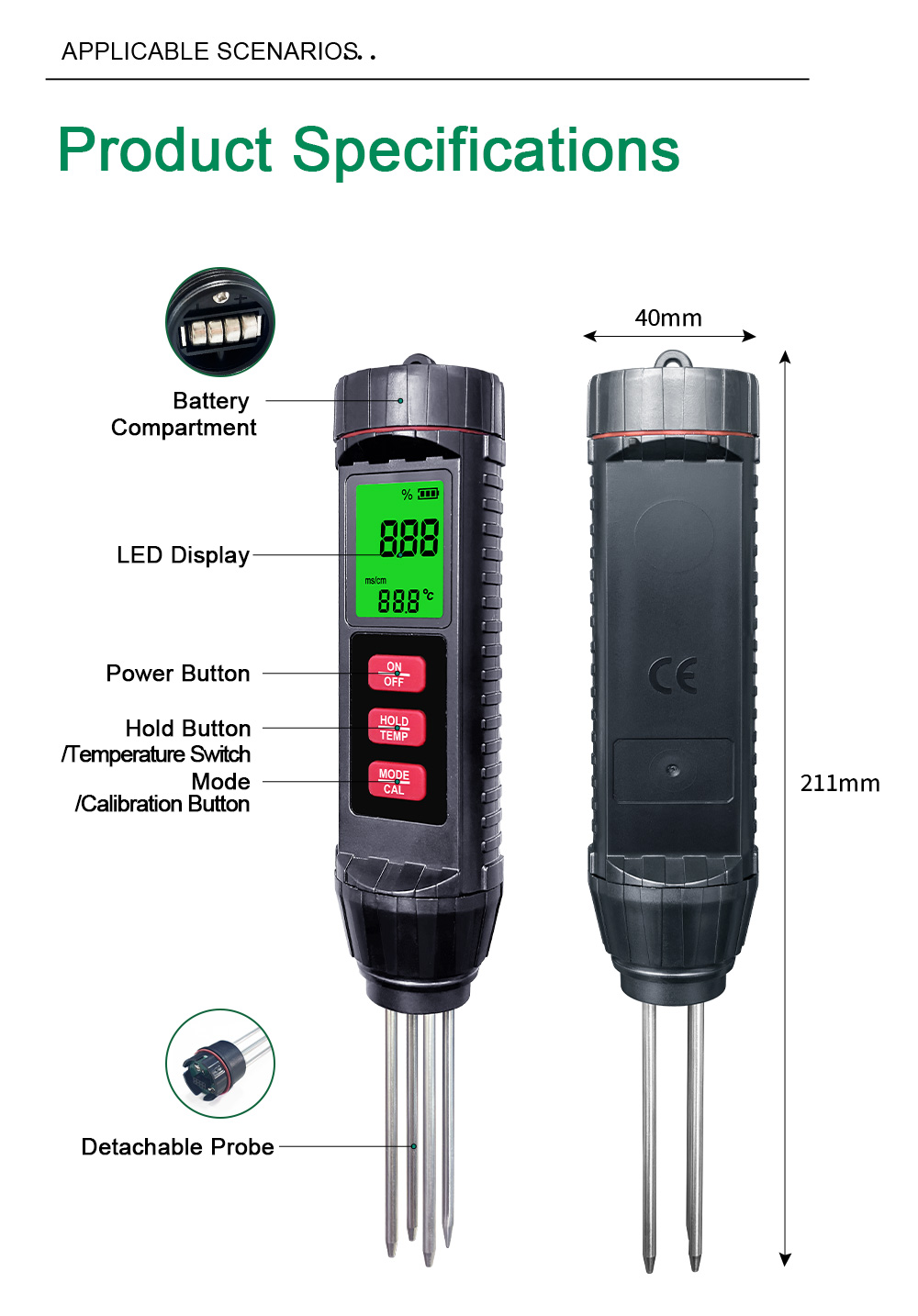
Soil organic matter plays a critical role in soil chemistry, but many operators don't realize it can significantly interfere with soil pH meter readings. When you measure soil pH using a soil ph meter, the presence of decomposing organic material, humic acids, and microbial activity creates a complex electrochemical environment that challenges even high-quality instruments. Understanding this interference is essential for agricultural professionals, environmental consultants, and soil scientists who depend on accurate soil ph meter data for field decisions.
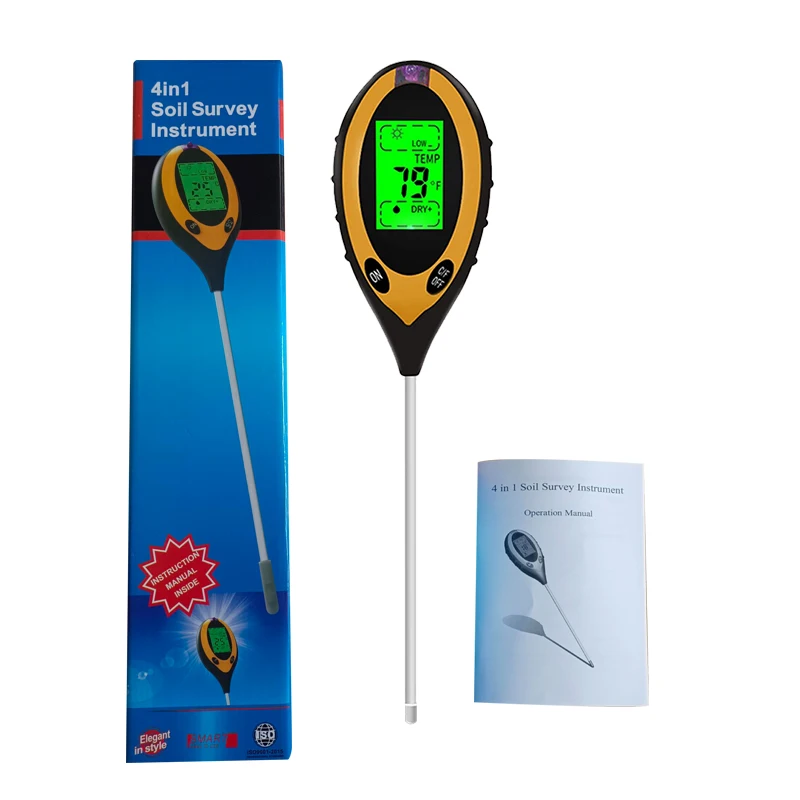
The relationship between soil organic matter and soil ph meter performance reveals why calibration, sample preparation, and measurement timing all matter. High organic matter content—common in compost-amended soils, forest floors, and wetland areas—creates electrical conductivity fluctuations and ion exchange dynamics that can shift soil ph meter readings by 0.5 to 1.5 pH units or more. This article explores the mechanisms behind this interference and provides practical strategies to ensure your soil ph meter delivers reliable results even in organically rich soils.
How Organic Matter Interferes with Soil pH Meter Accuracy
The Role of Humic Acids and Organic Compounds
Soil organic matter consists of complex polymers, humic substances, and partially decomposed plant and animal residues. These compounds contain carboxylic acid groups and phenolic hydroxyl groups that actively participate in pH buffering. When a soil ph meter electrode contacts soil rich in organic matter, these humic acids can donate or accept protons, altering the local pH environment around the sensor. The soil ph meter responds to this altered ionic activity rather than the true free hydrogen ion concentration, resulting in readings that don't reflect the actual exchangeable acidity or alkalinity of the soil mineral matrix.
Electrical Conductivity and Ion Exchange Effects
High organic matter content increases soil electrical conductivity because decomposing organic material releases dissolved salts, dissolved organic carbon, and various anions and cations. A soil ph meter relies on a stable reference electrode potential and consistent electrolyte bridge performance; when conductivity changes dramatically, the reference electrode response becomes sluggish or unstable. Additionally, organic matter increases the cation exchange capacity of soil, meaning more hydrogen ions are bound to soil colloids and not immediately available in the soil solution. A soil ph meter reads only the free hydrogen ions in solution, so when organic matter sequesters protons, the soil ph meter can underestimate true acidity even though the soil's acid-buffering power remains high.
Why Soil pH Meter Readings Shift in Organic-Rich Soils
Temporal Dynamics and Microbial Activity
In organically rich soils, microbial decomposition is ongoing and dynamic. Microorganisms respire, producing carbon dioxide and organic acids that lower pH in microsites around decomposing material. A soil ph meter inserted into such soil may encounter local pH variations depending on where the electrode tip contacts the soil matrix. If the probe sits near an active decomposition zone, the soil ph meter reading may drift downward over several seconds as acids diffuse toward the electrode. This temporal instability makes it difficult to obtain a stable soil ph meter reading without multiple measurements and averaging.
Colloidal Coating and Electrode Fouling
High organic matter often means high colloidal clay and organic colloid concentration. These fine particles can adhere to the glass bulb of a soil ph meter electrode, creating a coating that slows ion diffusion and impairs the electrode's response time. Organic coatings are particularly problematic because they can trap ions and alter the electric potential at the glass-solution interface. When you use a soil ph meter in organically rich soils without proper cleaning between samples, the electrode coating accumulates, causing drift and reduced accuracy. This is why field technicians using a soil ph meter in high-organic-matter environments must clean electrodes more frequently than in mineral soils.
Practical Solutions for Reliable Soil pH Meter Measurements
Sample Preparation and Standardization
To minimize organic matter interference, prepare soil samples using a consistent soil-to-water or soil-to-extractant ratio, typically 1:1 or 1:2.5 by mass. A soil ph meter will read more consistently in a standardized suspension because the dilution reduces the concentration of organic acids and microbial activity. Allow the soil-water mixture to equilibrate for 15 to 30 minutes before measuring, giving organic acids time to dissolve into the solution and pH to stabilize. This waiting period helps your soil ph meter reach a more representative reading because it accounts for the slow-release nature of organic acids from soil colloids.
Calibration and Electrode Maintenance
Calibrate your soil ph meter immediately before each field session or laboratory measurement round using buffer solutions at pH 4.0 and 7.0, or pH 7.0 and 10.0 depending on your soil range. In high-organic-matter environments, recalibrate your soil ph meter every 10 to 15 measurements rather than once per day. After each measurement in organic-rich soil, rinse the electrode thoroughly with distilled water and gently wipe it with a soft, lint-free tissue. For stubborn organic coatings, soak the electrode in a mild cleaning solution designed for soil ph meter sensors, then rinse and recalibrate before the next sample.
Cross-Validation and Field Documentation
For sites with high organic matter content, take multiple soil ph meter readings at the same location and record all values rather than relying on a single measurement. Calculate the average and note any drift or inconsistency in the soil ph meter readings. If readings vary by more than 0.3 pH units across replicates, the organic matter interference is likely significant, and you may consider complementary laboratory analysis using a different method, such as electrode potentiometry in an organic-matter-amended reference solution. Document the organic matter content of each soil sample so that future soil ph meter users understand the measurement context and can adjust their interpretation accordingly.
FAQ
Can soil organic matter cause a soil ph meter to read falsely high?
Yes, organic matter can shift soil ph meter readings in either direction depending on the specific composition and age of the organic material. Fresh plant residues and young organic matter tend to release organic acids that lower pH and push the soil ph meter reading toward higher acidity. Older, well-humified organic matter sometimes increases soil buffering capacity and can cause the soil ph meter to read higher than the true free hydrogen ion concentration. The direction and magnitude of the soil ph meter error depend on the organic matter source, decomposition stage, and local microbial community activity.
How much organic matter causes noticeable soil ph meter interference?
Organic matter content above 5% to 10% by weight typically produces measurable soil ph meter interference. Soils with 15% or higher organic matter—such as peat-amended agricultural land, compost-enriched garden beds, or forest A-horizons—almost always show significant soil ph meter reading shifts compared to adjacent mineral soils. Even at lower organic matter percentages, if the organic material is fresh, reactive, or undergoing active decomposition, your soil ph meter may register noticeable deviation. Testing several replicates helps identify when organic matter interference becomes substantial enough to warrant corrective action.
Should I use a different method instead of a soil ph meter for high-organic-matter soils?
A quality soil ph meter remains the most practical tool for field and routine laboratory soil pH measurement, even in organically rich soils. However, if you require highly precise pH data for research, regulatory compliance, or critical agricultural decisions in very high-organic-matter soils, consider complementary laboratory analysis using methods such as ion-selective electrode (ISE) potentiometry with organic-matter-adjusted buffer solutions or pH titration procedures. For most agronomic and environmental applications, proper calibration, sample preparation, and electrode maintenance allow a soil ph meter to deliver sufficiently accurate results in organic-rich soils.