EN
EN


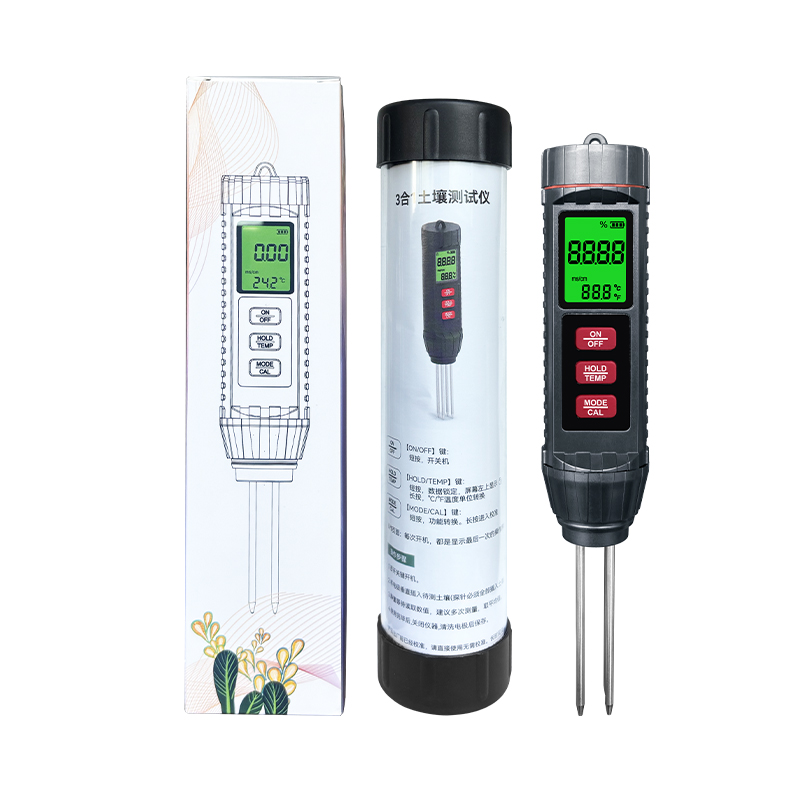
Selecting the right soil moisture meter requires understanding the critical relationship between measurement depth and actual crop root zones. A soil moisture meter that reads only surface soil provides misleading data about plant water availability, potentially leading to overwatering, underwatering, or crop stress. The depth range your soil moisture meter covers directly determines whether you'll make informed irrigation decisions or rely on incomplete information about subsurface moisture conditions.
Understanding soil moisture meter depth specifications is essential for agriculture, landscaping, turf management, and environmental monitoring. Most crops absorb water from multiple soil layers, and a reliable soil moisture meter must capture moisture content where roots actually extract water. This article explores the optimal depth ranges for different crop types, explains why soil moisture meter accuracy depends on proper probe depth, and guides you toward selecting a soil moisture meter that matches your specific agricultural or horticultural needs.
Understanding Crop Root Zone Depths
Shallow-Rooted Crops and Turf
Shallow-rooted plants including most turf grasses, lettuce, spinach, and radishes typically extract water from the upper 6 to 12 inches of soil. For these crops, a soil moisture meter should reliably measure moisture at depths between 2 and 8 inches to capture the primary root activity zone. Using a soil moisture meter designed for deeper measurement on shallow-rooted crops may miss critical moisture variations in the active root layer, leading to either excess irrigation or insufficient watering during critical growth stages.
Turf management specialists rely on soil moisture meter readings at approximately 4 to 6 inches depth to optimize irrigation scheduling for sports fields, golf courses, and landscaped areas. A soil moisture meter with poor shallow-depth sensitivity may not detect early water stress signals that shallow roots experience. Conversely, an overly sensitive soil moisture meter in the upper 2 inches picks up surface evaporation effects rather than plant-available water, reducing the accuracy of irrigation decisions for shallow-rooted species.
Medium-Rooted Crops
Vegetables including beans, corn, cucumbers, and peppers develop root systems extending 12 to 24 inches into the soil profile. A soil moisture meter suitable for medium-rooted crops should measure moisture consistently across the 6 to 18 inch range to capture where these plants extract most of their water. This soil moisture meter depth range encompasses both the early-season shallow water absorption and the deeper moisture that mature plants access during peak demand periods.
Agricultural operations managing medium-rooted vegetables often use a soil moisture meter capable of readings at multiple depths, such as 6, 12, and 18 inches, to understand the vertical moisture distribution. This approach helps determine whether soil moisture meter data suggests uniform hydration or reveals dry layers that might limit plant performance. A soil moisture meter with fixed shallow depth may indicate adequate moisture while deeper layers lack water, creating false confidence in irrigation adequacy.
Deep-Rooted Crops and Perennial Species
Orchards, Vineyards, and Tree Crops
Fruit trees, grapevines, and other perennial woody crops develop extensive root systems reaching 24 to 48 inches or deeper into the soil profile. For these high-value crops, a soil moisture meter designed for shallow measurement fails to reflect actual plant-available water. Orchardists and vineyard managers require a soil moisture meter that measures moisture at 18 to 36 inch depths to assess whether trees can access water during extended dry periods or between irrigation cycles.
Using a basic soil moisture meter limited to 6 inch depth on orchard trees produces unreliable data because the primary root zone operates much deeper in the soil profile. Progressive orchard management employs a soil moisture meter capable of reaching 24 to 30 inches, sometimes supplemented with readings at 12 inches to understand how moisture moves through soil layers. This soil moisture meter strategy reveals whether surface irrigation reaches deeper roots or if deeper watering is needed, preventing unnecessary water application in shallow layers while roots lack moisture deeper down.
Dryland Crops and Deep-Rooted Perennials
Crops adapted to arid conditions, including certain varieties of wheat, sorghum, and deep-rooted perennial pasture species, survive by extracting moisture from 24 to 48 inch depths. A soil moisture meter for dryland agriculture must reach deep into the soil profile where these plants access stored moisture between growing seasons. Standard soil moisture meter designs fail in these applications because they cannot measure the moisture reserves that determine crop survival and productivity in water-limited environments.
Dryland farmers using a soil moisture meter to guide supplemental irrigation decisions must choose equipment capable of sampling 24 to 36 inch depths, with some operations measuring even deeper to 48 inches. A soil moisture meter with adequate deep-reaching capability reveals whether subsoil contains available water, informing decisions about whether to invest in irrigation or rely on precipitation. This soil moisture meter depth capability transforms dryland management from guesswork to data-driven decision making.
Selecting the Right Soil Moisture Meter for Your Application
Matching Soil Moisture Meter Depth to Your Crops
The optimal soil moisture meter for any agricultural or horticultural operation aligns depth range with crop root distribution. Before purchasing a soil moisture meter, identify the primary rooting depth of your target crops. Consult agronomic resources or local extension services to confirm typical root zones, then select a soil moisture meter that extends at least to the lower boundary of the primary root zone, ideally with some additional depth capacity for detecting moisture dynamics below the active root layer.
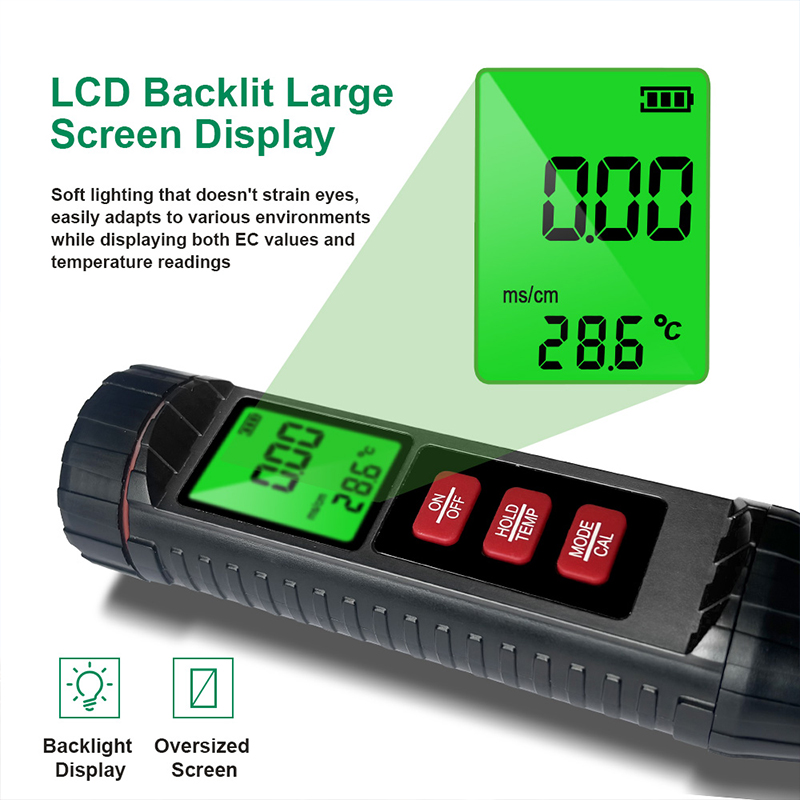
A soil moisture meter typically operates through analog needles or digital displays that respond to soil electrical conductivity changes correlating with moisture content. Probe length directly determines the soil depth a soil moisture meter samples, and probe insertion depth governs the reading depth. Choose a soil moisture meter with probe length matching or exceeding your target measurement depth, ensuring the probe can reach full insertion without binding on compacted layers or stones.
Practical Soil Moisture Meter Measurement Strategy
Using a soil moisture meter effectively requires taking multiple readings at different depths across the field or growing area. Instead of relying on a single soil moisture meter measurement at one location, professional growers sample multiple spots to create a moisture profile showing how water distributes vertically and spatially. A soil moisture meter reading at 6 inches, combined with readings at 12 and 18 inches, reveals whether moisture exists throughout the root zone or concentrates at certain depths.
Proper soil moisture meter technique involves inserting the probe fully to the target depth, allowing adequate time for the sensor to equilibrate with soil moisture, and recording the reading. A soil moisture meter designed for shallow measurement requires careful handling to avoid over-inserting the probe, which would damage the sensor. Conversely, a soil moisture meter with inadequate probe length cannot reach the needed depth regardless of technique, making equipment selection fundamental to successful moisture monitoring.
FAQ
What depth should a soil moisture meter reach for vegetable gardens?
Most vegetable gardens benefit from a soil moisture meter measuring moisture at 6 to 12 inch depths, covering the primary root zones of common garden vegetables. A soil moisture meter with adjustable depth capability or multiple probe length options allows you to adapt to different crops within the same garden space. For shallow crops like lettuce, take soil moisture meter readings at 4 to 6 inches, while tomatoes and peppers require your soil moisture meter to reach 12 inches or deeper.
Can a shallow soil moisture meter work for large trees and shrubs?
A shallow soil moisture meter provides incomplete information for trees and shrubs with deep root systems, potentially missing the moisture conditions that actually affect plant performance. Trees require a soil moisture meter capable of measuring at 18 to 36 inches or deeper to assess water availability in the active root zone. Using only a soil moisture meter limited to shallow measurement on trees leads to either over-irrigation that wastes water or under-irrigation that stresses the plants during dry periods.
How do I know the correct depth for my soil moisture meter?
Determine the appropriate soil moisture meter depth by researching the typical root depth of your specific crops or plants, then select a soil moisture meter that reaches at least to the lower boundary of the primary root zone. Agricultural extension offices provide crop-specific rooting depth information, and your soil moisture meter should exceed these depths slightly to capture subsoil moisture dynamics. Testing your soil moisture meter at multiple depths reveals which readings most accurately correlate with plant stress or growth performance, helping optimize your irrigation decisions.