EN
EN


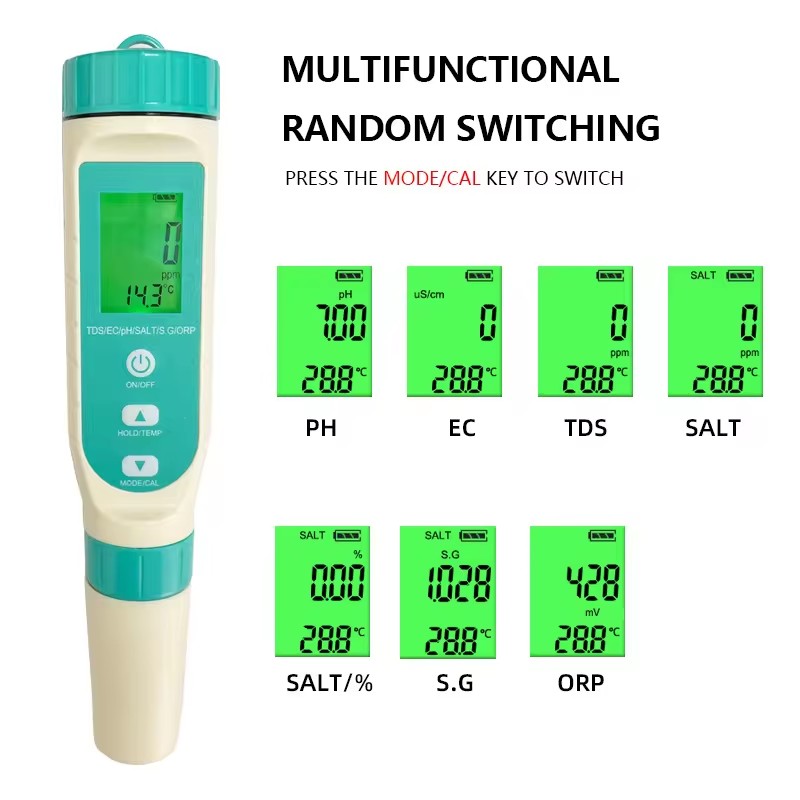
Water quality professionals and aquarium enthusiasts rely on accurate measurements to maintain safe, healthy environments. A salinity tester provides critical data about dissolved salt concentrations, but accuracy depends heavily on understanding how temperature affects readings. Without proper temperature compensation, even premium salinity tester devices can deliver misleading results that compromise water chemistry management and biological safety.
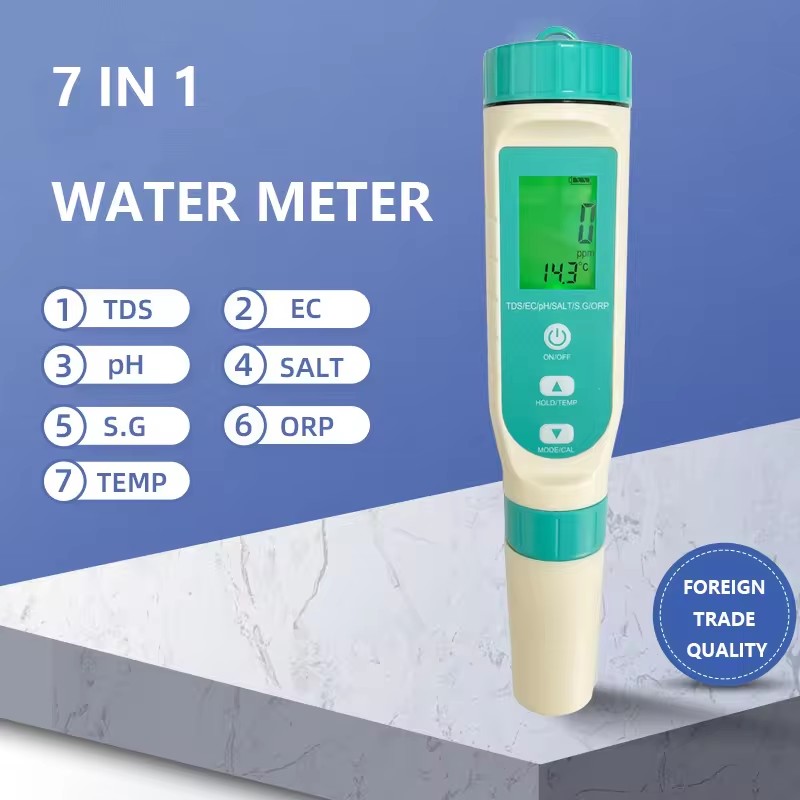
Temperature compensation is an advanced feature that allows a salinity tester to automatically adjust readings based on water temperature, eliminating one of the most common sources of measurement error. This technology has become essential for professionals managing pools, spas, aquariums, and marine research environments. Understanding how temperature compensation works in a salinity tester helps users select the right instrument and interpret results with confidence.
Why Temperature Affects Salinity Tester Readings
The Physics Behind Temperature-Salinity Interaction
Electrical conductivity, which a salinity tester measures indirectly to determine salt content, changes predictably with temperature. Water molecules move faster at higher temperatures, allowing ions to travel more freely and increasing electrical conductivity even when salt concentration remains constant. A salinity tester without temperature compensation will overestimate salt levels in warm water and underestimate them in cold water, creating false data that leads to incorrect treatment decisions.
The relationship between temperature and conductivity is nearly linear across most practical operating ranges. For every degree Celsius change, conductivity can shift by approximately 2 to 3 percent depending on water composition. Over a 10-degree variation, a basic salinity tester could generate errors exceeding 20 to 30 percent, making temperature compensation not just helpful but absolutely critical for reliable operation.
Real-World Impact on Water Management
In aquarium environments, an inaccurate salinity tester reading can stress marine organisms or allow dangerous salt imbalances to develop undetected. Pool operators using an unreliable salinity tester might overdose salt chlorine systems, increasing maintenance costs while potentially damaging equipment. These errors compound over time, making investment in a quality salinity tester with built-in temperature compensation a practical necessity rather than a luxury feature.
How Temperature Compensation Improves Salinity Tester Accuracy
Automatic Calibration Adjustment Mechanisms
Modern salinity tester instruments integrate thermistors or temperature sensors that monitor water conditions in real time. When you use a salinity tester with temperature compensation, the device automatically calculates a correction factor and applies it to raw conductivity data before displaying the final salinity reading. This internal algorithm reference table, programmed by the manufacturer, ensures that the salinity tester delivers consistent results regardless of ambient water temperature fluctuations.
The most advanced salinity tester models use multiple reference standards across temperature ranges to refine accuracy across various environments. A budget salinity tester might use a single linear correction curve, while professional-grade instruments employ polynomial equations that account for non-linear behavior at temperature extremes. This technical sophistication directly translates to measurement reliability that users can trust for decision-making.
Standardization to Reference Temperature
A salinity tester with temperature compensation typically normalizes all measurements to 25 degrees Celsius, the industry standard reference point. This standardization allows readings from different locations, times, and seasons to be compared directly without manual adjustments. When comparing a salinity tester reading from early morning cold water to afternoon warm water, the temperature compensation ensures both measurements represent actual salt concentration changes, not thermal artifacts.
Practical Benefits and Implementation Considerations
Improved Decision-Making in Dynamic Environments
Professionals managing sensitive marine habitats depend on a salinity tester that responds accurately to true chemistry changes rather than temperature noise. With temperature compensation, operators can detect gradual salinity drift, equipment malfunctions, or environmental challenges that require corrective action. A salinity tester without this feature creates uncertainty that either leads to costly over-treatment or dangerous under-treatment of water systems.
Temperature compensation in a salinity tester also reduces the frequency of recalibration needed in fluctuating conditions. Instead of rechecking a salinity tester multiple times throughout the day as water temperature changes, users can rely on consistent readings within acceptable accuracy limits. This efficiency gain translates directly to reduced labor costs and improved operational confidence in professional settings.
Selecting a Salinity Tester with Temperature Compensation
When choosing a salinity tester, verify that the specification sheet explicitly mentions automatic temperature compensation rather than manual adjustment. Look for devices that display both temperature and compensated salinity readings simultaneously, allowing you to verify the salinity tester is functioning correctly and tracking temperature changes. Premium salinity tester models often specify their accuracy range and confirm compensation across the full temperature spectrum your application requires.
Budget-conscious buyers should understand that a cheap salinity tester lacking temperature compensation will generate costly errors over time through misguided corrective actions. Investing in a reliable salinity tester with built-in compensation typically pays for itself through improved accuracy and reduced waste. Many professional environments now consider temperature compensation non-negotiable when evaluating a salinity tester purchase decision.
FAQ
Can I use a salinity tester without temperature compensation?
Technically yes, but accuracy suffers significantly. A salinity tester without temperature compensation requires manual adjustment or recalibration as water temperature changes, which is time-consuming and prone to user error. For occasional casual measurements in controlled environments with minimal temperature variation, a basic salinity tester might suffice. However, professional applications, scientific work, and sensitive biological systems demand a salinity tester with automatic temperature compensation to ensure reliable results.
How do I verify that my salinity tester compensation is working correctly?
Test your salinity tester with calibration solutions at different temperatures. If the same calibration solution produces identical compensated readings when tested at 15 degrees Celsius and 30 degrees Celsius, your salinity tester temperature compensation is functioning properly. Many manufacturers provide calibration certificates documenting the salinity tester performance across temperature ranges. Review your salinity tester manual for the specific verification procedure recommended by your device maker.
Does temperature compensation affect how often I must calibrate my salinity tester?
Temperature compensation improves accuracy but does not replace calibration requirements. A salinity tester should be calibrated according to manufacturer recommendations, typically monthly or quarterly depending on usage frequency and environment. Temperature compensation ensures that between calibrations, a salinity tester delivers consistent readings despite thermal fluctuations. Regular calibration of your salinity tester confirms that the compensation algorithm remains properly aligned with actual salt concentration standards.