EN
EN


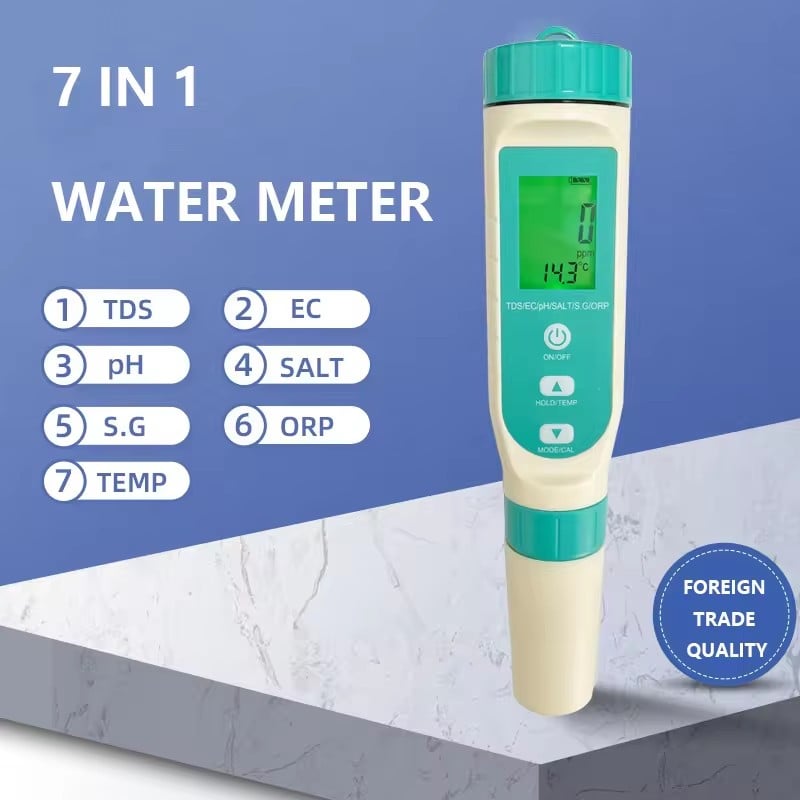
A salinity tester is an essential instrument for water quality monitoring across marine, agricultural, and industrial environments. However, field conditions can dramatically compromise a salinity tester's reliability and measurement accuracy. Understanding which environmental factors, operational stresses, and maintenance gaps cause a salinity tester to deliver unreliable results is critical for anyone relying on these instruments for decision-making. This article explores the specific conditions that undermine salinity tester performance and explains how to recognize when your instrument is producing questionable data.
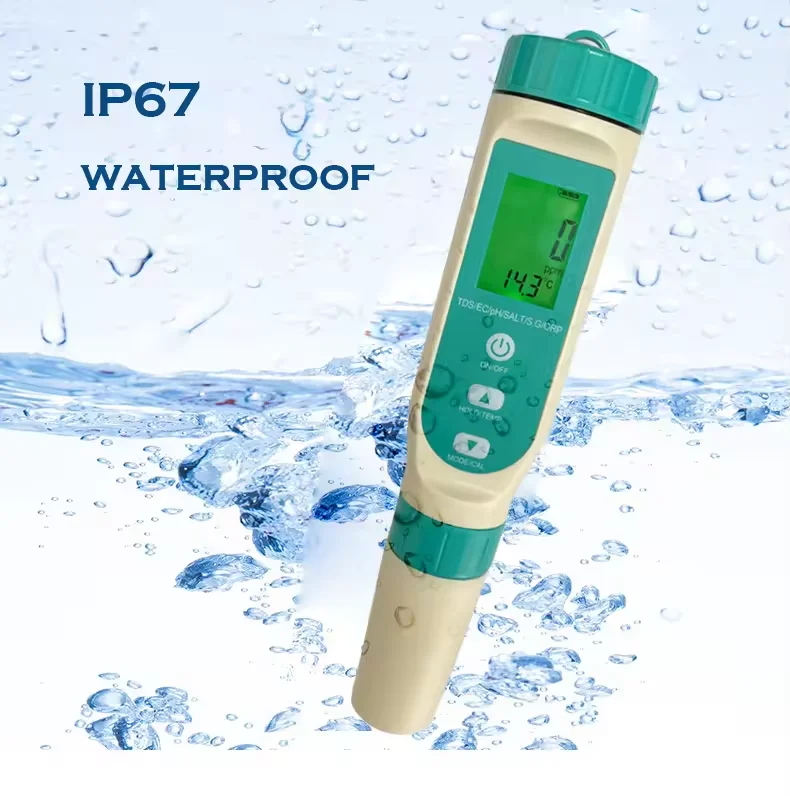
The reliability of a salinity tester depends on multiple interdependent factors that often work together in field settings. Temperature fluctuations, sensor fouling, calibration drift, and physical damage are among the most common culprits behind unreliable readings. Recognizing these failure points helps users maintain data integrity and know when to recalibrate, service, or replace their salinity tester equipment.
Temperature Extremes and Thermal Shock
How Temperature Affects Salinity Tester Sensors
Temperature is one of the most significant environmental factors that can make a salinity tester unreliable. Most conductivity-based salinity testers rely on electrical conductivity measurement to infer salt concentration. Conductivity itself is highly temperature-dependent—salt solutions conduct electricity more efficiently at higher temperatures and less efficiently at lower temperatures. When a salinity tester lacks proper temperature compensation or compensation algorithms, readings will drift significantly even if the actual salt content remains unchanged. A salinity tester calibrated at 25°C will produce inaccurate results when measuring at 10°C or 40°C without active temperature correction.
Thermal shock—rapid temperature changes—poses an additional problem for a salinity tester. If a salinity tester is moved from an air-conditioned facility into direct sunlight over coastal salt marshes, the sudden temperature rise can cause sensor crystals and electronic circuits to drift momentarily. This thermal lag means that a salinity tester may stabilize only after several minutes of field equilibration, leading users to record premature, unreliable readings if they do not wait for the display to settle.
Extreme Cold and Heat Scenarios
Operating a salinity tester below freezing or above 50°C typically voids the operating range specified by the manufacturer. In extreme cold, liquid crystal displays on a salinity tester may become sluggish, and the conductive gel inside probe chambers can thicken, slowing ion migration and producing artificially low salinity readings. Conversely, prolonged heat exposure can degrade the epoxy seals around sensor electrodes, allowing moisture intrusion that eventually makes a salinity tester completely unreliable and unusable.
Sensor Fouling and Biofilm Contamination
Organic Buildup on Salinity Tester Electrodes
Field water often contains suspended organic matter, algae, and biofilm-forming bacteria. When a salinity tester sits in natural water bodies or wastewater treatment environments, organic material accumulates on the electrode surfaces. Over days or weeks, this biofilm layer creates an insulating barrier that blocks direct ion contact with the electrode, causing a salinity tester to read artificially low or erratically. A visibly clean salinity tester may still harbor a microscopic biofilm layer that undermines accuracy, making it especially difficult for field operators to identify when their salinity tester has become unreliable.
Saltwater environments accelerate biofilm formation because halophilic (salt-loving) microorganisms thrive in high-salinity conditions. Aquaculture facilities and coastal monitoring sites see a salinity tester become unreliable much faster than freshwater operations. Operators who do not clean their salinity tester probes daily or after each measurement session will notice increasingly erratic and biased results within one to two weeks of field use.
Mineral Scaling and Salt Deposits
In hypersaline solutions, mineral scaling on a salinity tester electrode can occur within hours. As water evaporates from around the probe, salt crystals precipitate and form a hard crust. This crystalline layer prevents a salinity tester from accurately detecting the solution's true ionic strength. Similarly, iron oxide deposits and calcium carbonate buildup in highly mineralized freshwater can render a salinity tester unreliable. Unlike biofilm, which may partially dissolve during cleaning, mineral crusts often require mechanical scrubbing or chemical soaking to remove, and improper cleaning can scratch the electrode surface and permanently degrade a salinity tester.
Calibration Drift and Measurement Instability
Calibration Solution Deterioration
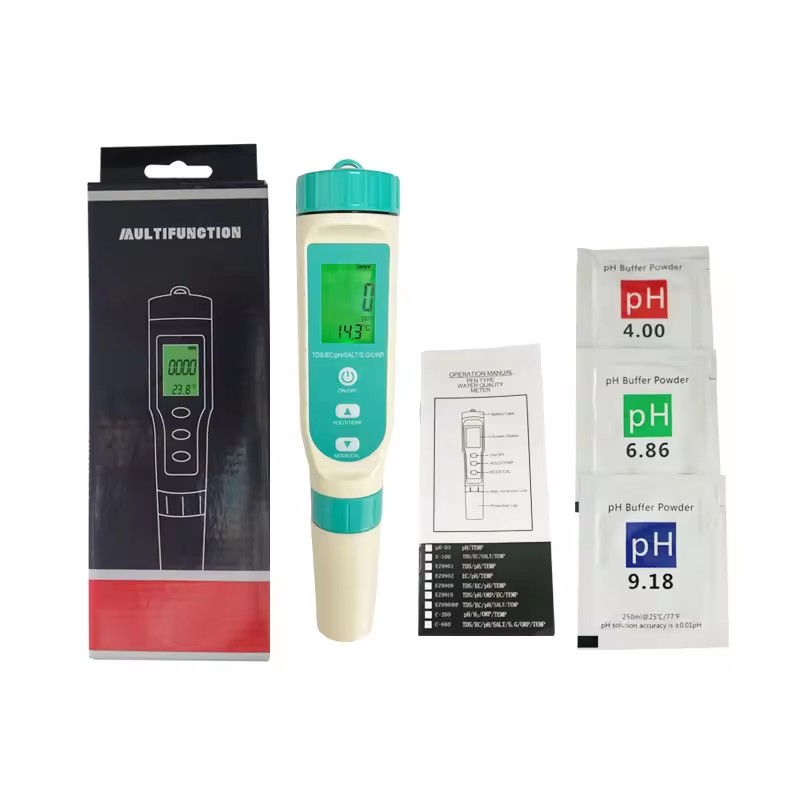
A salinity tester requires periodic calibration using known reference solutions to maintain accuracy. However, calibration solutions themselves degrade when exposed to air, light, or contamination. If a user recalibrates their salinity tester with an old, open bottle of reference standard that has been sitting on a laboratory shelf for six months, the reference solution may have concentrated through evaporation or absorbed atmospheric CO₂, making it unreliable. This means the salinity tester becomes systematically biased even immediately after calibration. Users who do not replace calibration solutions regularly or store them in sealed, light-protected containers will progressively introduce calibration error into every subsequent measurement their salinity tester makes.
The recommended practice is to use fresh, sealed calibration solutions for each salinity tester session. Opened reference solutions should be discarded after two to three weeks, and bottles should be stored at controlled temperature in the dark. Many field operators overlook this requirement, unknowingly causing their salinity tester to be systematically unreliable despite believing they have properly maintained the instrument.
Sensor Response Degradation Over Time
Even with proper care, the electrodes inside a salinity tester gradually degrade through electrochemistry and use. After hundreds or thousands of measurements, the electrode surface develops microscopic pitting or coating that slows the ionic response. This degradation makes a salinity tester produce delayed readings or increasingly unreliable output as conditions change rapidly. A salinity tester that worked perfectly two years ago may now stabilize slowly and drift between measurements, signaling that electrode replacement is needed. Manufacturers typically recommend electrode inspection or replacement every one to two years for active-use instruments, but many users operate a salinity tester far beyond the recommended service interval, not realizing their data has become progressively unreliable.
Physical Damage and Water Ingress
Probe Impact and Seal Failure
Field instruments endure rough handling, accidental drops, and pressure stress. Even a moderate drop or probe impact can crack the housing of a salinity tester or dislodge internal seals. Once the waterproof seal is compromised, moisture penetrates into electronic components and causes intermittent electrical faults. A salinity tester with failed seals may produce wildly fluctuating readings, intermittent errors, or sudden shutdowns. Users often misdiagnose this as a calibration problem when the root cause is water ingress making the salinity tester physically unreliable at the component level.
Stress corrosion from saltwater exposure is particularly damaging. Metal connector pins and circuit board traces corrode when exposed to salt spray and moisture. A salinity tester that worked reliably in freshwater may become unreliable within weeks if moved to a coastal or maritime environment without proper protective storage and handling. Corrosion can be invisible until electrical failure occurs suddenly during a critical measurement session.
Battery Degradation and Power Supply Issues
A salinity tester relies on stable power to energize electrodes and amplify sensor signals. Weak or failing batteries cause erratic voltage delivery, which introduces measurement noise and drift. When battery voltage drops below specification, a salinity tester may still display readings, but those readings become increasingly unreliable and unstable. Many users fail to replace batteries regularly, assuming that visible readings indicate adequate power. However, a salinity tester with declining voltage will show symptoms such as delayed stabilization, drift between consecutive measurements, and reduced sensitivity to actual salinity changes. Operators should replace batteries preemptively before field campaigns and not wait until the display dims visibly.
FAQ
How can I tell if my salinity tester is becoming unreliable in the field?
Several warning signs indicate your salinity tester is becoming unreliable: inconsistent readings when measuring the same sample multiple times, unexpectedly long stabilization times, visual display dimming or distortion, physical corrosion around connectors, and drift between calibration sessions. If your salinity tester exhibits any of these symptoms, stop using it for critical measurements and conduct a full maintenance check or recalibration. Compare measurements against a known reference solution to confirm whether the salinity tester is drifting, and visually inspect the probe for biofilm, scaling, or visible damage.
What is the recommended maintenance schedule to prevent a salinity tester from becoming unreliable?
A reliable salinity tester requires daily or post-measurement cleaning with distilled water, weekly inspection for biofilm and deposits, calibration before each field campaign or weekly if in continuous use, battery replacement every six to twelve months depending on usage, and annual electrode inspection with replacement if pitting or coating is visible. After saltwater or contaminated-water measurements, rinse the salinity tester probe immediately to prevent mineral scaling and corrosion. Store your salinity tester in a dry, temperature-controlled environment between uses, and keep calibration solutions sealed and protected from light and contamination.
Can a salinity tester be recalibrated to fix unreliable readings, or does it need replacement?
Recalibration can restore accuracy only if the salinity tester's sensors are still functioning within manufacturer specifications and the electrodes are clean and intact. If readings are unreliable due to fouling, biofilm, or mineral deposits, cleaning the probe first may restore accuracy without replacement. However, if the salinity tester shows signs of physical water damage, corrosion, slow response, or systematic drift that persists after recalibration with fresh reference solutions, the electrodes likely need professional servicing or replacement. If the instrument is older than five to seven years and has seen heavy field use, replacement may be more cost-effective than repair.