EN


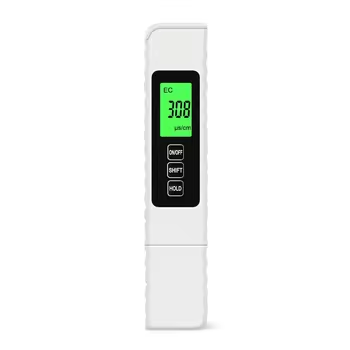
The pharmaceutical industry operates under some of the strictest regulatory frameworks globally, and this extends directly to every analytical tool used in manufacturing and quality assurance processes. A ppm meter represents far more than a simple measurement device in pharmaceutical settings. It serves as a critical control point that ensures water purity, ingredient concentration accuracy, and ultimately, product safety and efficacy. Pharmaceutical manufacturers must verify that every ppm meter used in their facilities meets precise accuracy thresholds because even minor deviations in parts-per-million measurements can compromise batch integrity, trigger regulatory violations, and create serious public health risks.
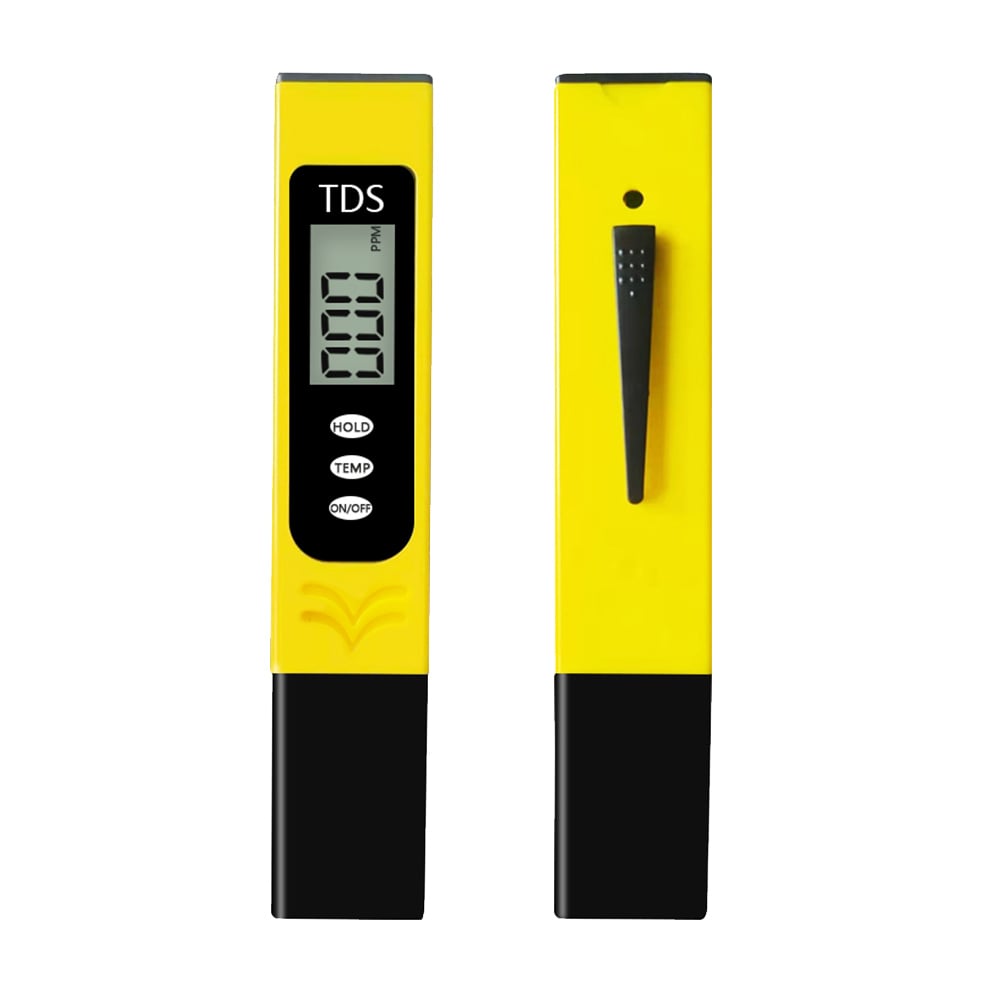
Understanding the specific accuracy requirements that govern ppm meter deployment in pharmaceutical operations is essential for quality assurance managers, laboratory directors, and compliance officers. The pharmaceutical industry does not simply choose arbitrary accuracy levels. These specifications are derived from decades of regulatory guidance, industry best practices, and scientific validation protocols that have proven critical to maintaining product quality and patient safety.
Regulatory Standards Governing Pharmaceutical Ppm Meter Accuracy
FDA and ICH Guidelines for Ppm Meter Specifications
The U.S. Food and Drug Administration establishes rigorous expectations for analytical equipment used in pharmaceutical manufacturing, and the ppm meter falls squarely within this oversight. FDA regulations, particularly 21 CFR Part 211, mandate that all equipment used in production and testing environments must be properly calibrated, maintained, and validated. A pharmaceutical-grade ppm meter must typically demonstrate accuracy of ±2% or better across its entire operating range. This requirement ensures that when a ppm meter reads a specific concentration, that measurement reflects actual dissolved solids or contaminants within a tightly controlled margin of error.
The International Council for Harmonisation (ICH) provides parallel guidance through its Q2(R1) Validation of Analytical Procedures document. ICH guidelines stress that a ppm meter used in pharmaceutical quality control must be validated before initial use and during periodic revalidation cycles. Specifically, a ppm meter employed for water system monitoring or raw material testing should demonstrate accuracy aligned with the precision requirements of the analytical method itself. For most pharmaceutical applications, this translates to a ppm meter accuracy specification of ±2% to ±5%, depending on the specific critical control point and the impact of measurement error on downstream product attributes.
Calibration and Verification Protocols for Ppm Meter Equipment
Beyond the baseline accuracy requirement, pharmaceutical companies must establish robust calibration protocols for every ppm meter in their quality system. A ppm meter cannot simply be purchased and used; it must be calibrated using traceable reference standards, typically certified solutions with known concentration values. Pharmaceutical operations typically conduct ppm meter calibrations using two-point or multi-point calibration procedures, ensuring the device performs accurately across the anticipated measurement range. Documentation of each ppm meter calibration must be maintained for at least three years and made available during regulatory inspections.
Verification of ppm meter performance does not end after initial calibration. Pharmaceutical manufacturers implement periodic verification checks, often daily or weekly, using control standards or reference solutions. This practice confirms that a ppm meter continues to operate within its established accuracy specification between formal recalibrations. If a ppm meter fails to meet its accuracy target during verification, it must be immediately removed from service, recalibrated, or retired, ensuring no erroneous measurements compromise product quality decisions.
Specific Accuracy Requirements Across Pharmaceutical Operations
Water System Monitoring and Ppm Meter Tolerances
Pharmaceutical water systems—including purified water, water for injection, and high-purity water—represent one of the primary applications for ppm meter measurement. The United States Pharmacopeia (USP) establishes specific limits for total dissolved solids, conductivity, and conductivity-based calculations in these water systems. A ppm meter deployed for water system monitoring must achieve accuracy of ±2% to ensure that measured values reliably indicate whether the water system remains within USP specifications. Most pharmaceutical operations specify that their ppm meter devices perform within ±1% to ±2% accuracy for water quality control to provide an additional safety margin below regulatory minimums.
The rationale behind this stringent ppm meter accuracy requirement is straightforward: water serves as a raw material in countless pharmaceutical processes, from solution preparation to equipment cleaning to manufacturing of sterile injectables. A ppm meter that underreports dissolved solids concentration could allow contaminated water to proceed into production, potentially compromising product quality or safety. Conversely, a ppm meter that overreports concentrations might trigger unnecessary system interventions or equipment maintenance, creating inefficiency and cost waste without genuine quality benefit.
Raw Material and In-Process Testing Ppm Meter Accuracy Standards
When a ppm meter measures active pharmaceutical ingredients, excipients, or in-process parameters like salt concentration or impurity levels, the accuracy requirement often becomes more stringent. Many pharmaceutical monographs specify acceptance criteria with ranges that demand high ppm meter precision. For example, if a specification requires that sodium chloride concentration fall between 8.5 and 9.5 ppm, a ppm meter with only ±5% accuracy could provide misleading results near the specification boundaries. Pharmaceutical quality assurance managers therefore typically select ppm meter devices that achieve ±2% accuracy or better for such critical measurements.
Documentation becomes paramount in these applications. Every ppm meter used for raw material or in-process testing must be registered in the pharmaceutical company's equipment management system, with traceability to calibration records, user training documentation, and method validation reports. This ensures that if a product batch later experiences any quality issue, investigators can rapidly access historical ppm meter accuracy performance data to determine whether measurement error contributed to the problem.
Validation and Qualification Framework for Ppm Meter Systems
Installation Qualification and Operational Qualification Protocols
Before a ppm meter can be introduced into a pharmaceutical operation, it must pass through Installation Qualification (IQ) and Operational Qualification (OQ) procedures. During IQ, the pharmaceutical company verifies that the ppm meter arrives in satisfactory condition, possesses proper documentation and certifications, and is installed correctly according to manufacturer specifications. IQ documentation confirms that the ppm meter meets the accuracy specification claimed by the supplier and that the device has been configured appropriately for its intended use environment.
Operational Qualification requires that the ppm meter be tested under actual operating conditions to confirm it delivers the specified accuracy. This typically involves challenging the ppm meter with multiple reference standards spanning its intended measurement range, documenting the measured versus expected values, and calculating the accuracy deviation. A ppm meter that demonstrates accuracy within its specification across the OQ testing range may proceed to performance qualification. If a ppm meter fails OQ, it must be returned to the supplier, repaired, or replaced before production use is authorized.
Performance Qualification and Ongoing System Validation
Performance Qualification (PQ) represents the final validation step before a ppm meter begins routine production use. During PQ, the pharmaceutical company employs the ppm meter to measure actual samples or representative test materials, verifying that measurement results are consistent, reproducible, and aligned with established accuracy expectations. A ppm meter that successfully completes PQ is formally qualified and documented in the validation master file for that particular analytical procedure or equipment system.
Ongoing system validation extends throughout the lifecycle of a ppm meter. Pharmaceutical companies implement preventive maintenance schedules, periodic recalibrations, and requalification protocols to maintain confidence that a ppm meter continues performing accurately over time. Many pharmaceutical operations conduct full revalidation of a ppm meter every one to three years, depending on regulatory guidance and internal risk assessments. This commitment to continuous validation ensures that a ppm meter remains a trustworthy control point within the pharmaceutical quality system.
FAQ
What accuracy percentage do most pharmaceutical companies require from a ppm meter?
Most pharmaceutical companies require a ppm meter to achieve accuracy of ±2% or better for critical quality control applications. Some operations implement even stricter standards of ±1%, particularly for water system monitoring or raw material testing where measurement error could directly impact product safety. The specific accuracy requirement for a ppm meter depends on the analytical method, regulatory guidance, and the criticality of the measurement parameter.
How often must a pharmaceutical ppm meter be calibrated to maintain accuracy compliance?
Pharmaceutical-grade ppm meters typically require formal calibration at least annually, though many companies implement more frequent calibration cycles of quarterly or semi-annual intervals. Additionally, a ppm meter should undergo routine verification checks daily or weekly using control standards to confirm that accuracy remains within specification between formal recalibrations. If a ppm meter fails verification, it must be immediately recalibrated or removed from service.
Can a ppm meter designed for non-pharmaceutical applications meet pharmaceutical accuracy requirements?
While some general-purpose ppm meters may technically meet the stated accuracy percentage, pharmaceutical regulations require that all equipment, including a ppm meter, be formally qualified and validated for the specific pharmaceutical application. A ppm meter must be explicitly calibrated with traceable standards, undergo Installation, Operational, and Performance Qualification, and be documented in the pharmaceutical company's validation system. Generic ppm meters may lack the documentation trail and validation history demanded by regulatory compliance, making them unsuitable for pharmaceutical use regardless of their technical specifications.