EN
EN


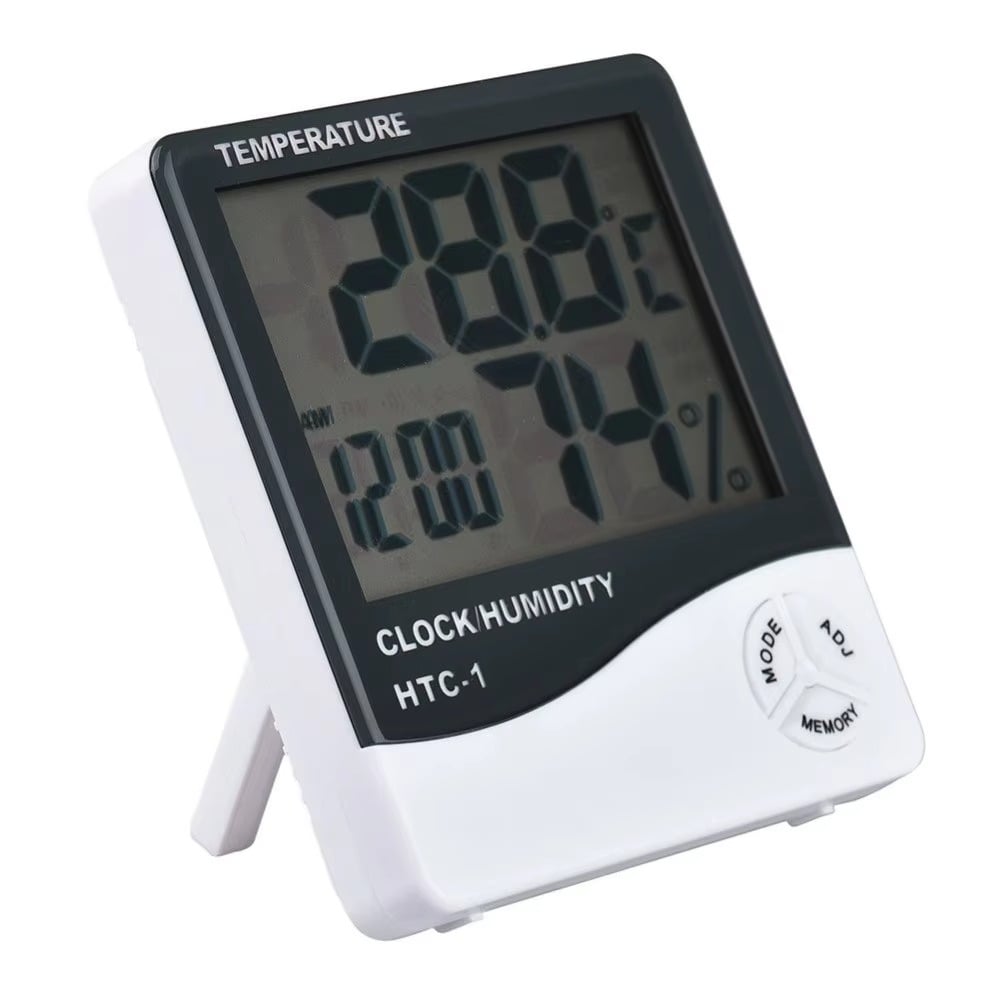
The food industry operates under strict regulatory frameworks that demand precision in every measurement, and perhaps no measurement is more critical than temperature control. A reliable thermometer has become an indispensable tool across food production, storage, and distribution. However, the effectiveness of any thermometer depends not only on accuracy but also on its response time, which is the speed at which it detects and displays temperature changes. Understanding what thermometer response time the food industry demands is essential for businesses seeking to maintain safety standards, comply with regulations, and protect consumer health.
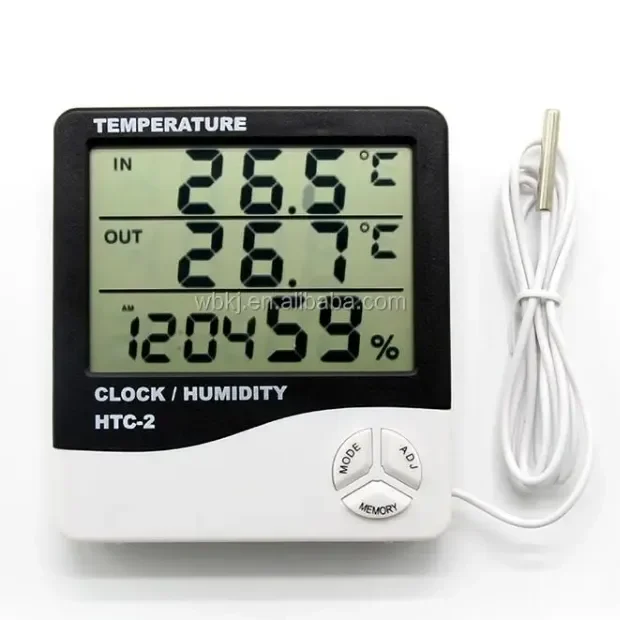
The food industry encompasses multiple sectors, each with distinct temperature control needs. Whether managing commercial kitchens, cold storage facilities, processing plants, or distribution centers, operators rely on a thermometer to verify that critical control points remain within safe parameters. The demand for thermometer response time has intensified as food safety regulations have evolved, driven by incidents of foodborne illness outbreaks and the need for faster detection of temperature excursions. Modern food operations require a thermometer that not only measures accurately but responds quickly enough to trigger corrective actions before food quality deteriorates or safety is compromised.
Industry Standards and Regulatory Requirements for Thermometer Response Time
HACCP and FDA Guidelines on Thermometer Performance
The Hazard Analysis and Critical Control Points (HACCP) system forms the backbone of food safety management worldwide. Within HACCP frameworks, a thermometer serves as a critical monitoring instrument at control points such as cooking, cooling, and storage stages. The FDA Food Safety Modernization Act and related regulations do not specify a single universal response time standard for every thermometer, but they require that monitoring equipment, including any thermometer used for safety verification, must be reliable and capable of detecting temperature changes within reasonable timeframes. For practical food safety, the industry consensus has emerged that a thermometer should achieve a response time of 30 seconds or less for most applications, with certain high-risk scenarios demanding even faster readings.
NSF International and Certification Standards for Thermometer Equipment
NSF International certifies equipment used in food service environments and establishes performance criteria for thermometers. NSF standards require that a thermometer maintain accuracy within a defined range while also demonstrating adequate response speed to temperature changes. These certification requirements ensure that a thermometer sold for commercial food use has been tested to withstand the demands of busy kitchens and processing environments. A certified thermometer typically achieves response times between 10 and 30 seconds depending on the sensor type and application. The certification process reflects industry demand for a thermometer that operators can trust to provide timely readings without causing delays in production workflows or compromising food safety verification.
Practical Response Time Requirements Across Food Industry Segments
Cooking and Hot Holding Applications for Thermometer Measurement
In commercial kitchens and food production facilities, operators must verify that foods reach minimum safe internal temperatures before service. When checking doneness of roasted poultry, ground meat, or seafood, a thermometer with slow response time can delay production and frustrate kitchen staff. Industry practice demands that a thermometer used for cooking verification achieves response times of 15 to 30 seconds, allowing chefs to rapidly verify multiple items during high-volume service periods. The faster a thermometer responds, the fewer ingredients need to be tested to verify safe cooking temperatures across a batch. Additionally, a thermometer with rapid response time enables more frequent spot-checks, reducing the statistical risk of missing an under-cooked item. Modern commercial kitchens increasingly deploy a thermometer with response times under 20 seconds to balance accuracy with operational efficiency.
Cooling and Cold Storage Monitoring with Thermometer Systems
Cold chain management represents one of the most critical food safety functions, as pathogens proliferate rapidly when prepared foods cool too slowly or remain in the danger zone between 40°F and 140°F. A thermometer used to monitor cooling processes must detect temperature changes quickly to alert operators when cooling rates fall below acceptable standards. The food industry demands that a thermometer in cooling applications respond within 30 seconds or less, ensuring that temperature excursions are caught before large quantities of prepared food enter the danger zone. Slower thermometer response times in cooling monitoring create blind spots where dangerous temperature plateaus may be missed. Many advanced facilities now employ continuous monitoring thermometer systems that log temperatures automatically, supplemented by manual verification using handheld thermometers with response times under 15 seconds to enable rapid intervention if cooling stalls.
Choosing and Validating a Thermometer for Food Industry Standards
Understanding Sensor Technology and Thermometer Response Characteristics
Different thermometer types exhibit different response characteristics. Analog dial thermometers typically respond more slowly than digital thermometers, often requiring 30 to 45 seconds to stabilize. A thermometer with thermocouple or resistance temperature detector (RTD) sensors achieves faster response, typically 10 to 20 seconds. Understanding the underlying sensor technology helps food safety managers select a thermometer appropriate for their specific application. For time-sensitive applications like rapid cooling verification or high-volume cooking checks, a thermometer with thermocouple sensing provides the fastest response. A thermometer designed for cold storage monitoring may prioritize stability over pure speed, as storage temperatures change gradually. The food industry increasingly favors thermometers with digital readouts and rapid-response probes because they combine speed with clear visibility, reducing operator error and interpretation delays.
Validation, Calibration, and Testing Protocols for Thermometer Accuracy and Speed
A thermometer cannot be trusted simply because it is labeled with response time specifications. Food industry standards demand regular validation through ice-point and boiling-point tests to verify both accuracy and response time. Operators should test a thermometer's response time by inserting it into a water bath at a known temperature and timing how long it takes to reach a stable reading. Industry practice calls for validating a thermometer at least monthly, with additional testing after any physical damage or suspected calibration drift. Regulatory inspectors specifically examine thermometer validation records to assess whether facilities have taken responsibility for verifying that a thermometer performs as expected. A thermometer that has drifted out of specification or shows delayed response time must be removed from service immediately. Proper thermometer management includes maintaining calibration records, establishing replacement schedules, and training staff on correct probe insertion depth and wait times, ensuring that a thermometer consistently meets the industry's demanding standards for both speed and accuracy.
FAQ
What is considered acceptable thermometer response time for food safety?
Industry standards generally accept a thermometer response time of 30 seconds or less for most food safety applications. Faster response times, between 10 and 20 seconds, are preferred in high-volume cooking and critical monitoring scenarios. Regulatory agencies like the FDA do not mandate a single universal thermometer response time requirement, but they expect facilities to use reliable monitoring equipment capable of detecting temperature excursions promptly. A thermometer's actual response time depends on sensor type, probe design, and the temperature differential being measured. Digital thermometers with thermocouple sensors typically outperform analog dial thermometers in response speed. Food operations should select a thermometer appropriate for their specific use case and validate its response time regularly through standard ice-point and boiling-point tests.
Why does thermometer response time matter in food processing?
A thermometer with slow response time creates blind spots in critical control point monitoring, increasing the risk that temperature excursions will go undetected until food has already entered the danger zone or dropped below safe thresholds. In cooling processes, a slow thermometer may not catch the moment when cooling stalls, leading to unnecessary food waste or, worse, serving unsafe products. In cooking verification, a slow thermometer delays production workflow and may frustrate kitchen staff, encouraging them to skip checks or use unreliable methods to estimate doneness. Conversely, a thermometer with rapid response time enables operators to make quick decisions, verify large volumes efficiently, and respond immediately to temperature problems. Fast thermometer response time also supports data logging in automated monitoring systems, where real-time temperature updates trigger alerts before conditions become hazardous. The financial and reputational costs of a foodborne illness outbreak far exceed the investment in a quality thermometer with excellent response characteristics.
How should food facilities validate that their thermometer meets industry response time demands?
Food facilities should establish a validation protocol that includes regular ice-point tests (32°F) and boiling-point tests (212°F or 100°C) to verify that a thermometer's response time and accuracy remain within acceptable limits. During an ice-point test, a thermometer is inserted into a cup of crushed ice and water, and the operator records how long it takes to reach 32°F and stabilize. Similarly, a boiling-point test measures response time in hot water. Industry guidance recommends validating a thermometer at least monthly and whenever it shows signs of damage or unusual behavior. Documentation of all thermometer validation tests should be maintained as proof of compliance during regulatory inspections. Staff should be trained on proper probe insertion depth, water bath preparation, and timing procedures to ensure consistent and accurate validation results. A thermometer that fails validation should be removed from service and either repaired, recalibrated, or replaced to ensure that food safety monitoring remains reliable and responsive to temperature changes.